Gallery
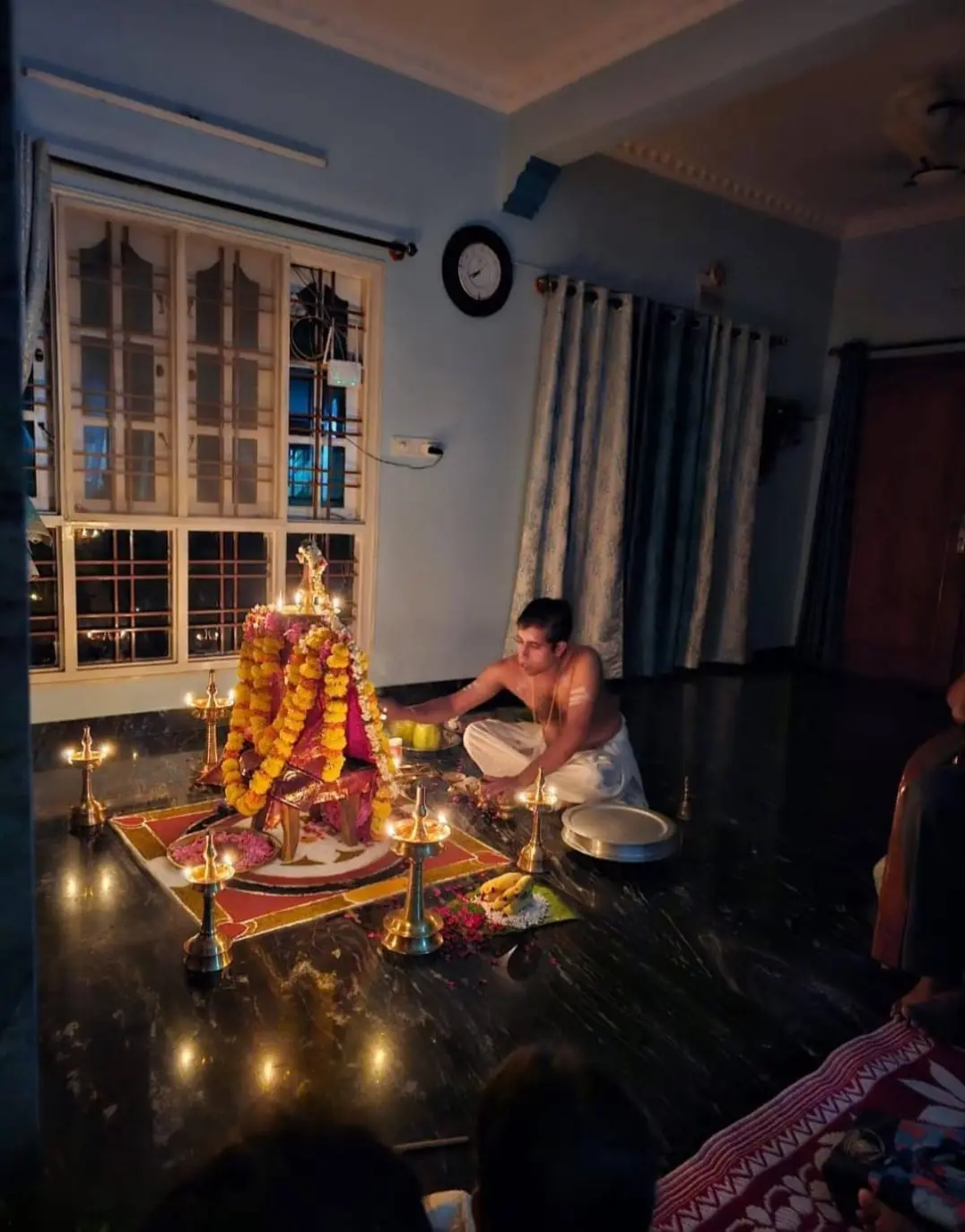
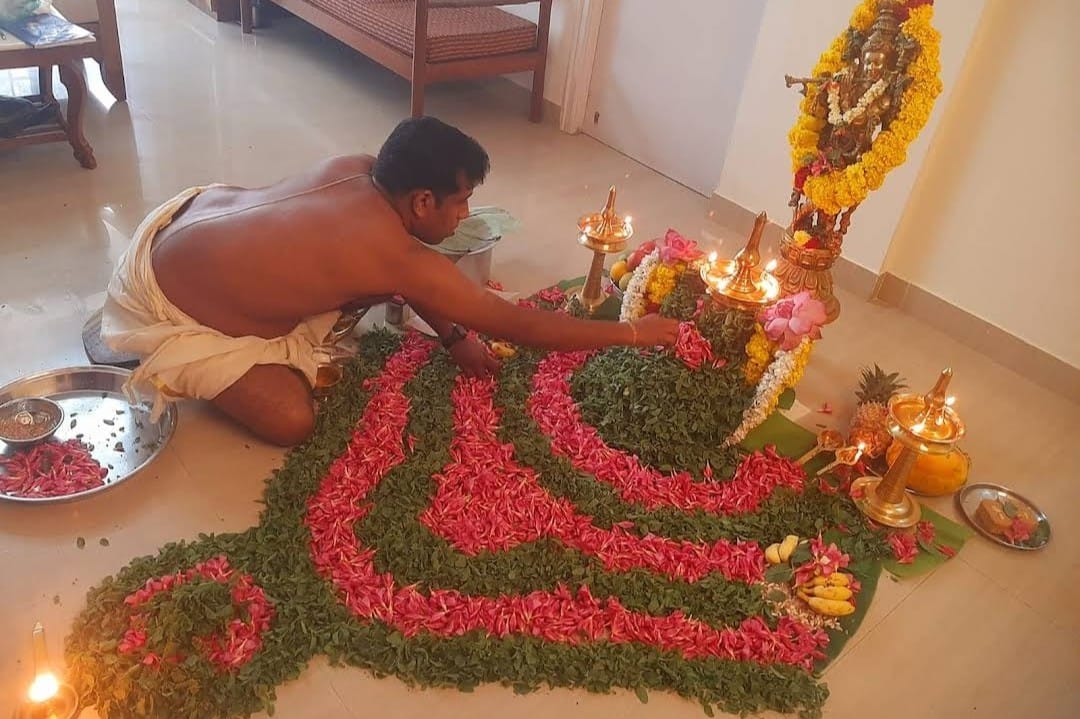
"Vishnu Pooja is the worship of Lord Vishnu, the preserver and protector in the Hindu Trinity (Brahma–Vishnu–Shiva). He represents dharma (righteousness), balance, compassion, and protection. Devotees pray to Vishnu for peace, stability in life, and spiritual growth.
Goddess Vishnu:
Vishnu Pooja is the sacred worship of Lord Vishnu, the Preserver of the Universe, along with his divine feminine energy (Shakti). While there is no separate deity known as “Goddess Vishnu,” the feminine aspect of Vishnu is expressed through Goddess Lakshmi, Mohini (female avatar), and Vishnu Maya. Vishnu Pooja therefore represents the worship of balance, protection, prosperity, and cosmic order (Dharma)..
Vishnu Pooja:
Lord Vishnu is the Preserver and Protector of the universe in Hinduism. He safeguards dharma (righteousness) and incarnates on earth whenever evil overpowers good.
Pooja and Homam:Vishnu pooja is performed daily in homes and temples with great devotion. The worship includes offerings such as Tulsi leaves, flowers, fruits, milk, payasam, and lighting of ghee lamps. Devotees chant sacred mantras like Om Namo Narayanaya, Vishnu Sahasranama, and Narayana Suktham to seek peace, prosperity, and spiritual growth. Vishnu homam is a sacred fire ritual conducted for protection from negative energies, good health, success in education and career, and family harmony. During the homam, offerings like ghee, sacred wood, herbs, and grains are offered into the fire while Vishnu mantras are chanted.
Several important festivals are associated with Lord Vishnu. Ekadashi, observed twice a month, is considered highly auspicious for Vishnu worship. Vaikunta Ekadashi celebrates the opening of the gates of Vaikunta, Vishnu’s divine abode. Other major festivals include Krishna Janmashtami, Rama Navami, Narasimha Jayanti, Vamana Jayanti, and Diwali, which marks the return of Lord Rama to Ayodhya.
Significance:
The significance of Vishnu worship lies in the belief that he grants divine protection and blessings to his devotees. Lord Vishnu is regarded as a compassionate guardian who removes fear, maintains balance in life, and blesses devotees with peace, prosperity, family well-being, and ultimately moksha (liberation). His worship emphasizes harmony, moral living, and devotion.
Cultural Context:
Regional Practices: n Kerala, he is popularly worshipped as Maha Vishnu, following tantric temple rituals, and is closely associated with the Onam festival, linked to his Vamana avatar. In Tamil Nadu, Vishnu is known as Perumal, and worship follows strong Vaishnava traditions, especially in the 108 Divya Desams. In Andhra Pradesh, he is worshipped as Lord Venkateswara at Tirupati, where offerings like laddu and hair sacrifice are common. In Karnataka, Vishnu worship is influenced by Madhva Vaishnavism, with emphasis on devotion to Krishna and Narayana.
Famous Temples: Many temples are dedicated to Lord Vishnu and his avatars across India. Among the famous Vishnu temples are Tirumala Tirupati Temple in Andhra Pradesh, Srirangam Ranganathaswamy Temple in Tamil Nadu, Badrinath Temple in Uttarakhand, Guruvayur Temple in Kerala, and Padmanabhaswamy Temple in Thiruvananthapuram. These temples are important centers of devotion and pilgrimage, reflecting the widespread and enduring worship of Lord Vishnu.